Business 2001
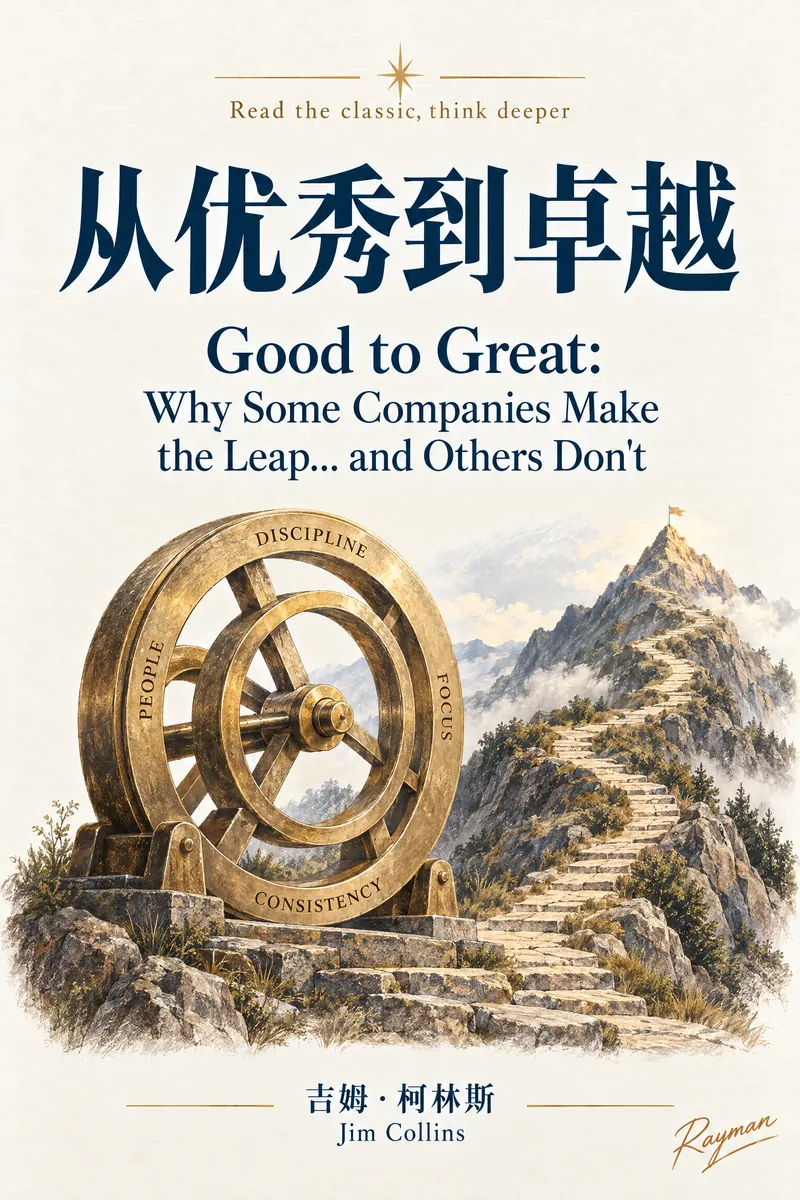
Good to Great
《从优秀到卓越》
Why Some Companies Make the Leap... and Others Don't
- Published
- 2001
- Category
- Business
- Difficulty
- Intermediate
- Reading time
- ~10 hours
- Original language
- en
The Classic Index is not an objective scientific measure. It is this site's personal curation score.
What is this book about?
Collins and his research team compare companies that made a sustained leap in performance with similar companies that did not, and identify patterns associated with the transition — level 5 leadership, first who then what, and the hedgehog concept.
Why read it?
It is a widely used case-based study of organizational change, and its methods — matched comparison, explicit criteria — are worth examining as an example of empirical management research. Later scrutiny of some sample companies makes it a good case study in how findings can decay.
Core Ideas
- Leadership that combines personal humility with professional will is associated with sustained results.
- Getting the right people on the bus precedes deciding where to drive.
- A hedgehog concept — the intersection of passion, best-in-world capability, and economic engine — focuses effort.
- Disciplined culture and disciplined action matter more than dramatic transformation programs.
What questions does this book try to answer?
- What turns an ordinary company into an exceptional one?
- Can research of this kind reliably identify causation?
Who should read it?
For managers and business-school readers. Read the critiques of its method and sample alongside it, so correlation is not mistaken for cause.
Related Books
If you like this book