Finance 2010
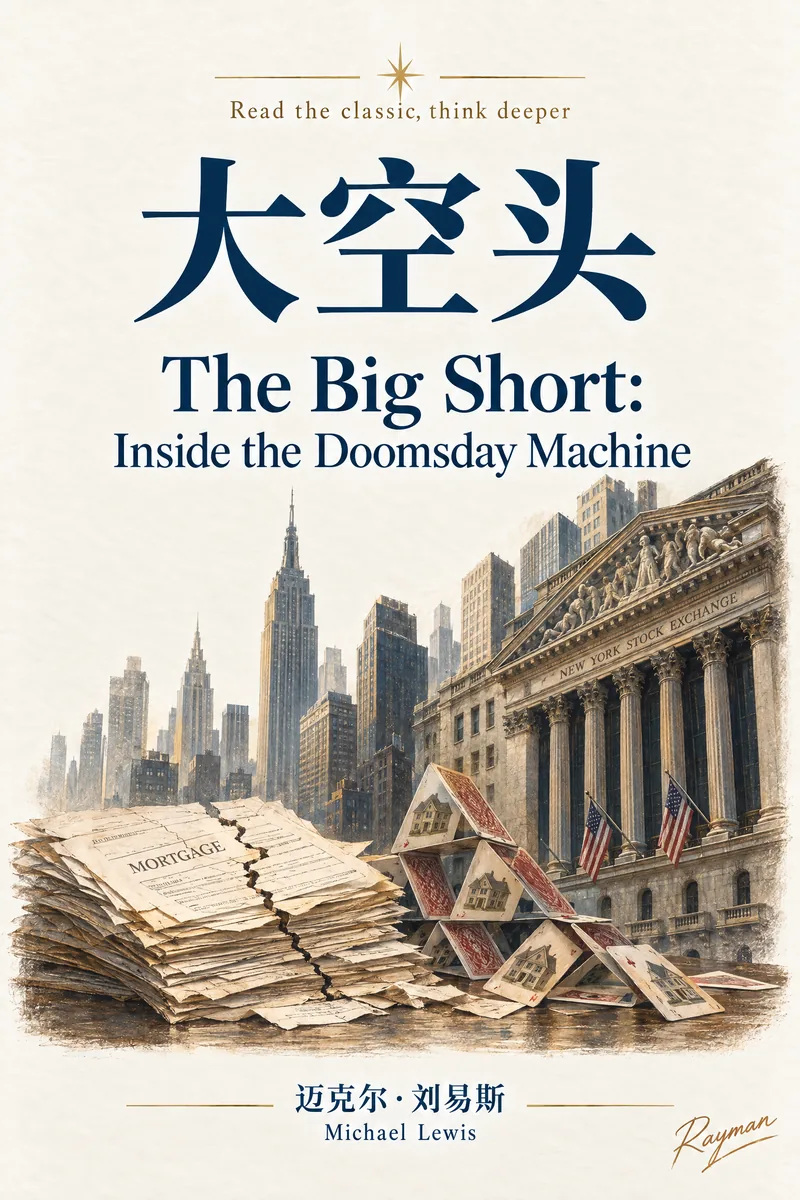
The Big Short
《大空头》
Inside the Doomsday Machine
- Published
- 2010
- Category
- Finance
- Difficulty
- Intermediate
- Reading time
- ~9 hours
- Original language
- en
The Classic Index is not an objective scientific measure. It is this site's personal curation score.
What is this book about?
Lewis follows a handful of small funds and traders who noticed that US mortgage securities were systematically mispriced, bet against subprime debt, and profited when the 2008 crisis arrived. He weaves the mechanics of structured finance into a narrative about the incentives that made the bubble possible.
Why read it?
It turns “bubble” from an abstraction into a chain of specific incentives and specific blind spots: why originators, rating agencies, and counterparties each failed to see the risk. More useful than its conclusions is its demonstration that careful reading of primary documents can expose a whole pricing system.
Core Ideas
- Structured products repackaged low-quality loans into highly rated securities; the risk did not disappear, it was transferred and relabelled.
- Every participant was rewarded for not looking: originators collected fees, rating agencies collected rating fees, traders collected spreads.
- The few who saw the mispricing had to survive the scepticism of their own backers and the cost of carry; being right was not enough to make money.
- The crisis was not an accident but an outcome the system was designed to permit.
What questions does this book try to answer?
- Why did so many professional institutions fail to see the subprime risk?
- What allows someone to hold a correct view when holding it means losing money for a long time?
Who should read it?
For readers curious about the mechanics of financial crises who can tolerate some technical detail. No industry background is required, though a few specialist terms will need patience.
Related Books
If you like this book