World History 1776
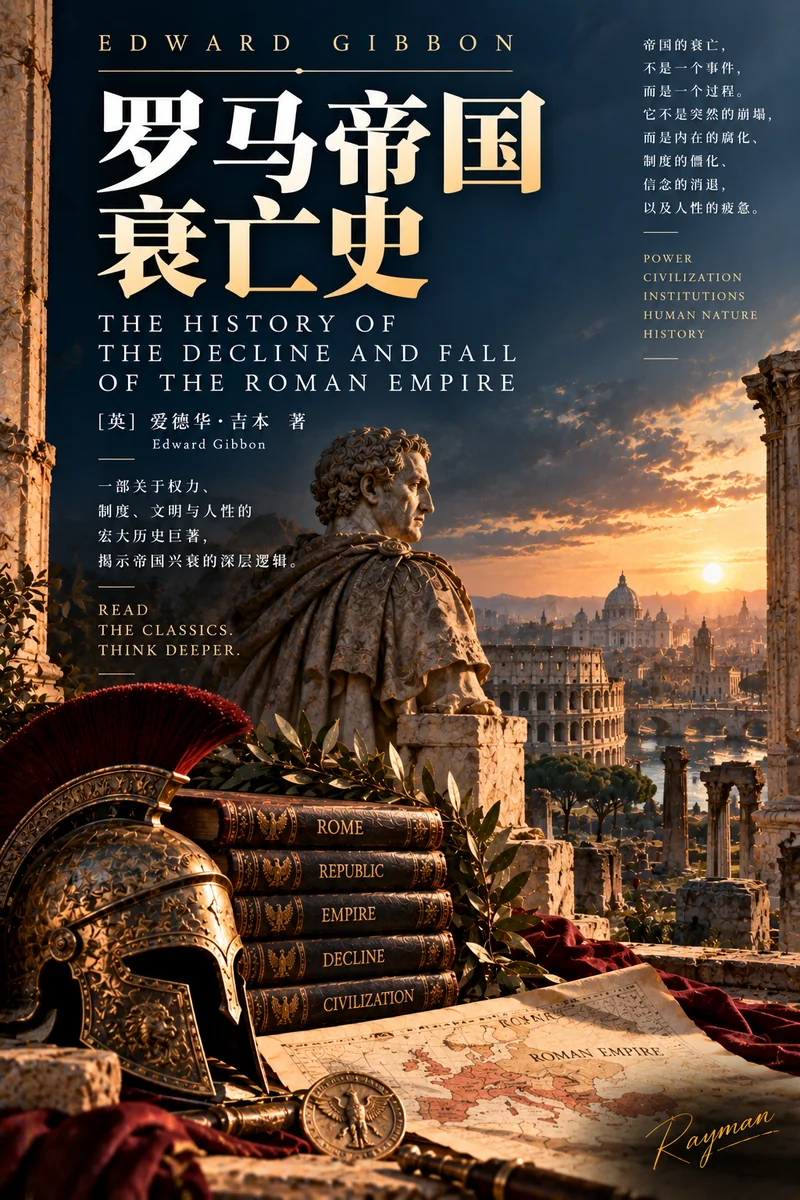
The History of the Decline and Fall of the Roman Empire
《罗马帝国衰亡史》
The History of the Decline and Fall of the Roman Empire
- Published
- 1776
- Category
- World History
- Difficulty
- Advanced
- Reading time
- ~40 hours
- Original language
- en
The Classic Index is not an objective scientific measure. It is this site's personal curation score.
What is this book about?
Gibbon’s multivolume history runs from the height of Rome to the fall of Constantinople, famous for its scale, its prose, and its interpretive theses about the role of Christianity and of civic virtue in Rome’s decline. It is a landmark of Enlightenment historiography.
Why read it?
Many of our default assumptions about “decline and fall” descend from this book, and its theses are still argued over. Reading it shows both the power of grand narrative history and its hazards.
Core Ideas
- Gibbon frames Rome’s decline as gradual, with internal factors at least as important as external pressure.
- He attributes part of it to civic energy redirected toward an otherworldly religion — a thesis later heavily contested.
- Barbarian pressure is presented as symptom and accelerator rather than sole cause.
- The work’s scale and style shaped how later generations imagined antiquity.
What questions does this book try to answer?
- Why does a long-stable empire come apart?
- Is “decline and fall” an event or a long process?
Who should read it?
For patient readers of history. The work is enormous; beginners may do better with an abridged edition first, then return to the whole.
Related Books
If you like this book