等待的建筑学:当「以后」变成「现在」的豁免凭证
In Buzzati's The Tartar Steppe an officer spends his whole life in a fortress waiting for an enemy who never comes; the horror is not the waiting itself but that waiting grows its own meaning
A Fortress With No Enemy
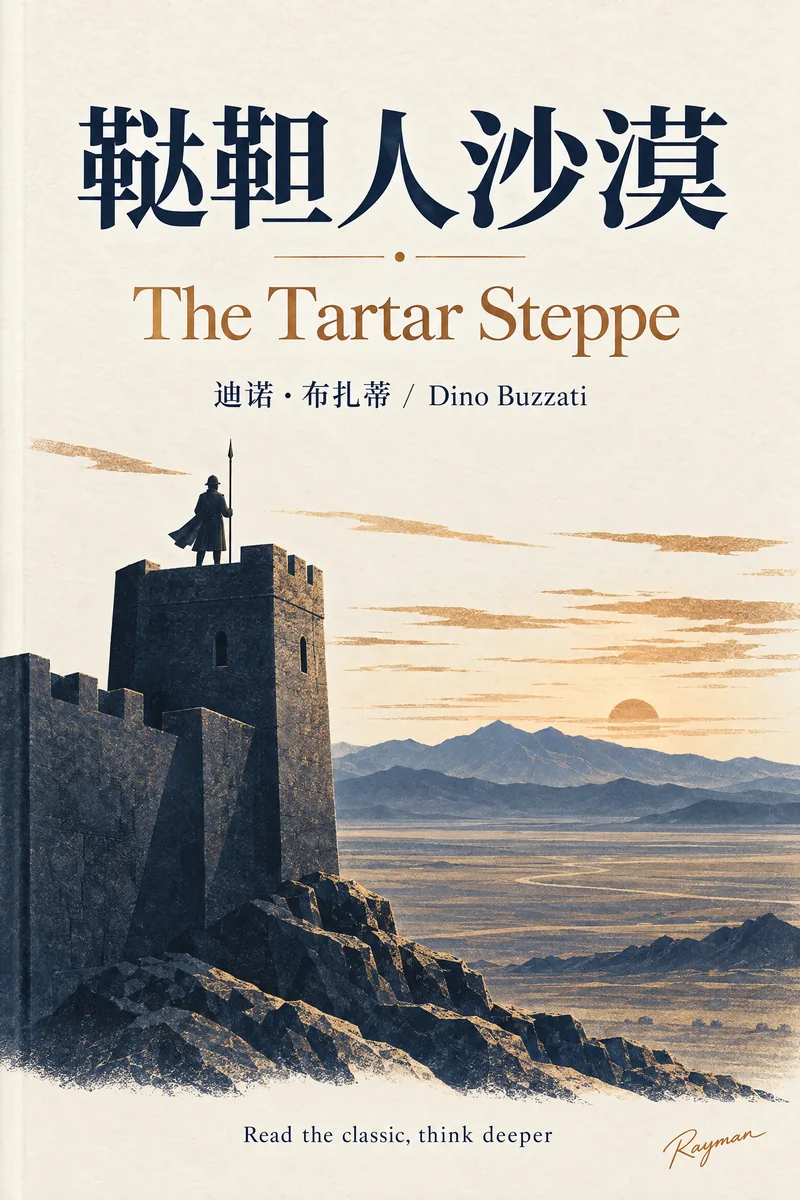
In 1940 the Italian writer Dino Buzzati published The Tartar Steppe. Its skeleton is deliberately simple. A young officer, Giovanni Drogo, is posted to Fort Bastiani on the northern frontier, where the garrison's only task is to watch the desert for the Tartars said to be massing in the north. He means to request a transfer within a few months. Neither the transfer nor the Tartars arrive. Decades pass; Drogo grows old and ill; and when the Tartars finally appear on the horizon he can no longer fight, is sent away from the fortress, and dies on the road.
The usual reading of this book is a warning: do not waste your life waiting. It is true, and it explains almost nothing. It portrays Drogo as weak or foolish, whereas the novel is careful to show the opposite — he sees his situation plainly and still finds it reasonable to stay. The question that actually needs answering is different: why does a wait with no return look rational at every particular moment?
How Waiting Grows Its Own Meaning
The answer is that waiting here is not a state of mind but a structure. Fort Bastiani is a military institution, and it translates an undated expectation into a daily schedule with a shape: watches, patrols, log entries, handovers. The expectation itself is empty, but the ritual that carries it is full. From this follows the decisive fact: the wait needs no outcome in order to sustain itself, because what sustains it is the routine, not the reward.
What locks the structure for good is a third mechanism — the cost of leaving. Inside the fortress, departure is not a neutral option. It means conceding that all the previous years were empty, and that the comrades who stayed were fools. Every additional year raises the psychological price of that concession by one notch. Drogo's persistence is therefore not procrastination but a rational calculation internal to the structure: continuing costs a vague future, while leaving costs an immediately payable admission of waste. Faced with those two prices, a person will rationally choose the first.
This is the architecture of waiting: once it has been ritualised, it grows its own meaning. It no longer requires an object that will genuinely arrive; it requires only a reason that is never questioned.
The Objection: Repetition Without Expectation Can Hold Dignity
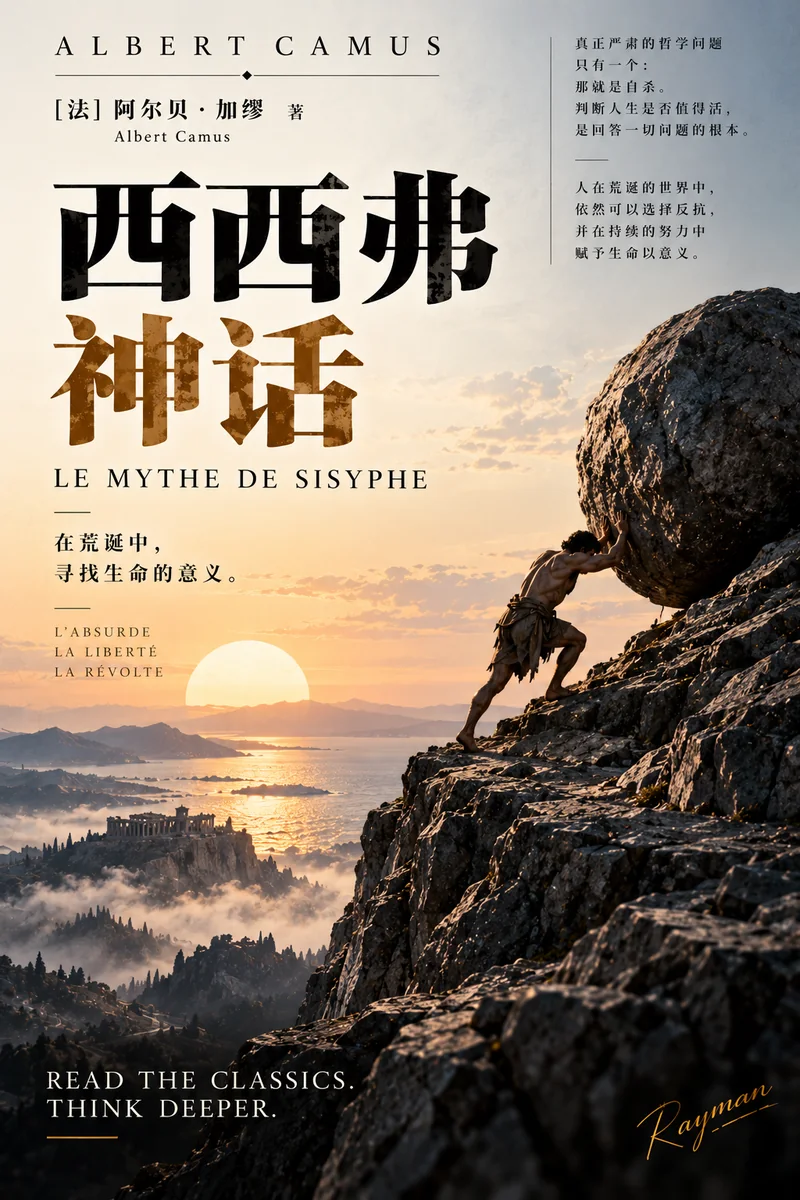
This argument has a serious opponent in Camus's The Myth of Sisyphus. The stone Sisyphus pushes always rolls back down; his labour is equally endless, equally repetitive, equally without destination. Yet Camus refuses to call this condition wretched, and asks that Sisyphus be imagined happy. If endless repetition were enough in itself to destroy the present, Camus's entire essay would collapse. "Waiting empties the present" therefore cannot stand as a universal claim.
The variable that separates the two cases is whether the expectation has been examined. Sisyphus knows the stone will never stay at the summit; he holds no promise. Drogo keeps his. What makes Sisyphus's repetition bearable is precisely that it carries no expectation, and what makes Drogo's wait destructive is precisely that it carries one which is never tested. The claim must therefore be narrowed: what is toxic is not duration, not repetition, but unexamined expectation.
A Harder Objection: Why Knowledge Is Not Enough for Freedom
The narrowed claim immediately runs into a harder problem. In Kazuo Ishiguro's Never Let Me Go, the students at Hailsham know their fate exactly: serve as a carer for a while, then donate organs, then "complete". The narrator, Kathy, harbours no illusions about it. By the criterion above she has examined it — the expectation is stripped away — so she should be free. She nonetheless complies, and does so in a gentle, co-operative, almost collaborative manner.
Ishiguro identifies a mechanism that is more disturbing: the institution supplies the very vocabulary in which you examine it. What the students endlessly discuss is the rumour of a "deferral" — that if two people are truly in love, the donations may be postponed. Never confirmed and never refuted, this hope is not a weakness of the students but the only topic the institution permits them to hold. Knowledge alone therefore does not constitute freedom, because the direction of the questioning can be designed too.
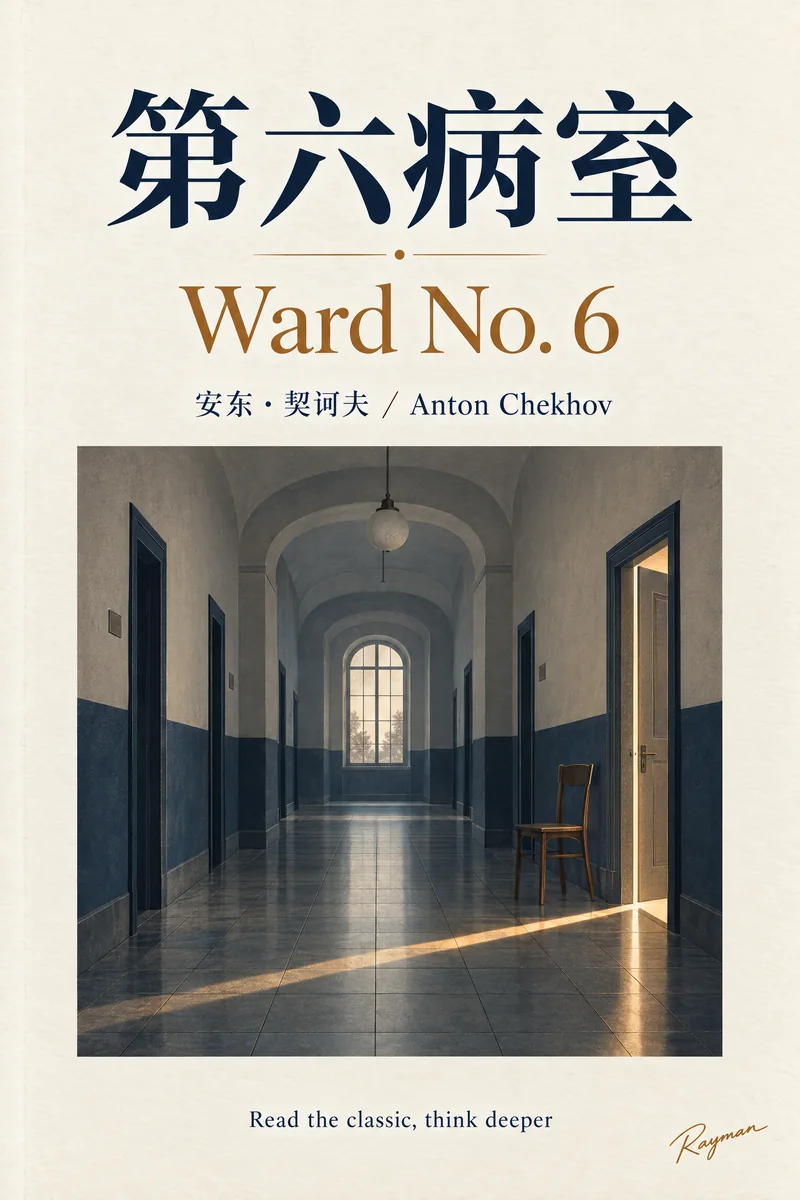
Chekhov reaches the same conclusion from the opposite side. In Ward No. 6, Dr Ragin explains his continued presence in the dilapidated hospital with a philosophy of endurance and acceptance; and it is precisely that philosophy which walks him, step by step, into the ward where he dies. The order of events deserves particular attention: it is not captivity that produces the rationalisation; the rationalisation completes the captivity.
Remove the Future, and the Present Does Not Collapse
If the argument holds, there is a counter-intuitive test available: delete the future altogether and see what happens to the present. Marlen Haushofer's The Wall, published in 1963, runs that experiment. The narrator wakes to find herself sealed off by an invisible wall, with the world beyond it — people and livestock alike — frozen where it stood. No rescue, no date of return; the future is cancelled outright. And she survives: she keeps animals, watches the seasons, keeps a diary. The novel does not describe a collapse. It describes how a present released from its mortgage becomes habitable.
That result carries weight, because it falsifies a popular assumption — that the present cannot stand on its own and needs the future to supply it with meaning. Haushofer suggests the opposite causality: what is unbearable is not the present but the fact of the present's being mortgaged to an uncertain future; cancel the mortgage, and the present turns out to be sufficient in itself.
Robert Seethaler's A Whole Life is evidence from the other direction. Andreas Egger's life contains no grand narrative: building cable cars, losing his wife, fighting a war, returning, growing old quietly. He does not treat the present as a corridor leading somewhere else; he simply finishes what is in front of him. Here is a life that is complete without a "later".
The Judgment: Corridor or Room
A bounded judgment is now possible. Waiting is not inherently a trap. A test result, a degree, a visa — these have real dates and definite objects; they are corridors, and the point is to walk through them. What is dangerous is a different structure, one that satisfies three conditions at once: undated, ritualised, defensible — no date of arrival, a routine that fills the days, and a reason that makes exit look shameful. When all three are present, the corridor has become a room, and the person inside it will start furnishing it.
Three diagnostics follow from this:
- Does the expectation have a date? Undated waits compound, because each passing year converts "I have waited this long" into a reason to keep waiting.
- Can the present be described on its own? If you cannot explain to someone what you are doing now without invoking the future goal, the wait has already consumed the present.
- Would you still do what is in front of you if it never arrived? This is Haushofer's test. It does not ask you to abandon the plan; it asks you to confirm there is something besides the plan.
One limit must be conceded at the end. These are diagnostics for an individual, and Ishiguro's point is that the vocabulary available to you, the questions you are permitted to raise, may itself be supplied by the arrangement that is waiting for you. They are therefore necessary but not sufficient: for an institutional wait they can clarify a person's position, but they cannot substitute for a structural right of exit. The real question is never whether you are waiting; it is whether you could still say what you were doing if nothing ever arrived.