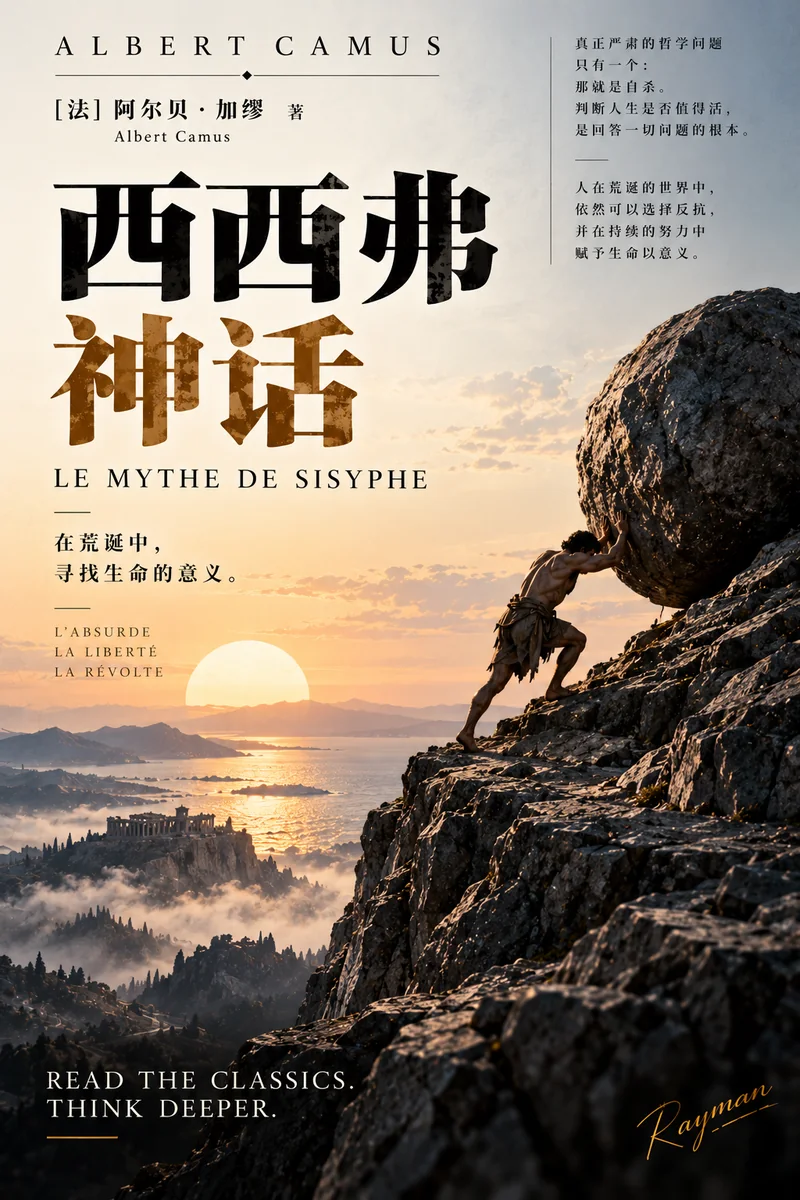
Philosophy 1942
The Myth of Sisyphus
《西西弗神话》
An Essay on the Absurd
- Published
- 1942
- Category
- Philosophy
- Difficulty
- Intermediate
- Reading time
- ~6 hours
- Original language
- fr
The Classic Index is not an objective scientific measure. It is this site's personal curation score.
What is this book about?
Camus begins with a question that admits no evasion: whether life is worth living is the first problem philosophy must face. Refusing both the religious leap and self-destruction, he defines the absurd as the standoff between our demand for meaning and a universe that offers none. The essay ends with Sisyphus, asking how a lucid person keeps acting when nothing has been promised.
Why read it?
It offers a response to modern meaninglessness that refuses consolation from either faith or nihilism, insisting instead on lucid action without appeal. The argument is compact and unusually clear, which makes it one of the gentlest entries into twentieth-century existentialist questions.
Core Ideas
- The absurd belongs neither to the world nor to the mind but to their encounter, where the human call for meaning meets a silent universe.
- Suicide cannot resolve the absurd because it cancels one of its terms; the genuine response is revolt, which means living on with full lucidity.
- "Philosophical suicide" names the attempt to close the gap with religion or a totalizing system, which Camus treats as evasion no less than physical surrender.
- Sisyphus pushes the boulder knowing it will fall again, and that persistence without illusion is his image of the absurd hero.
What questions does this book try to answer?
- On what grounds does one keep living once the world stops supplying meaning?
- Can lucidity and happiness coexist when there is no final answer?
Who should read it?
For readers drawn to existentialism, absurdist literature, or the problem of meaning; no philosophical training is required, but you should be willing to sit with an argument that deliberately refuses to conclude.
Related Books
If you like this book