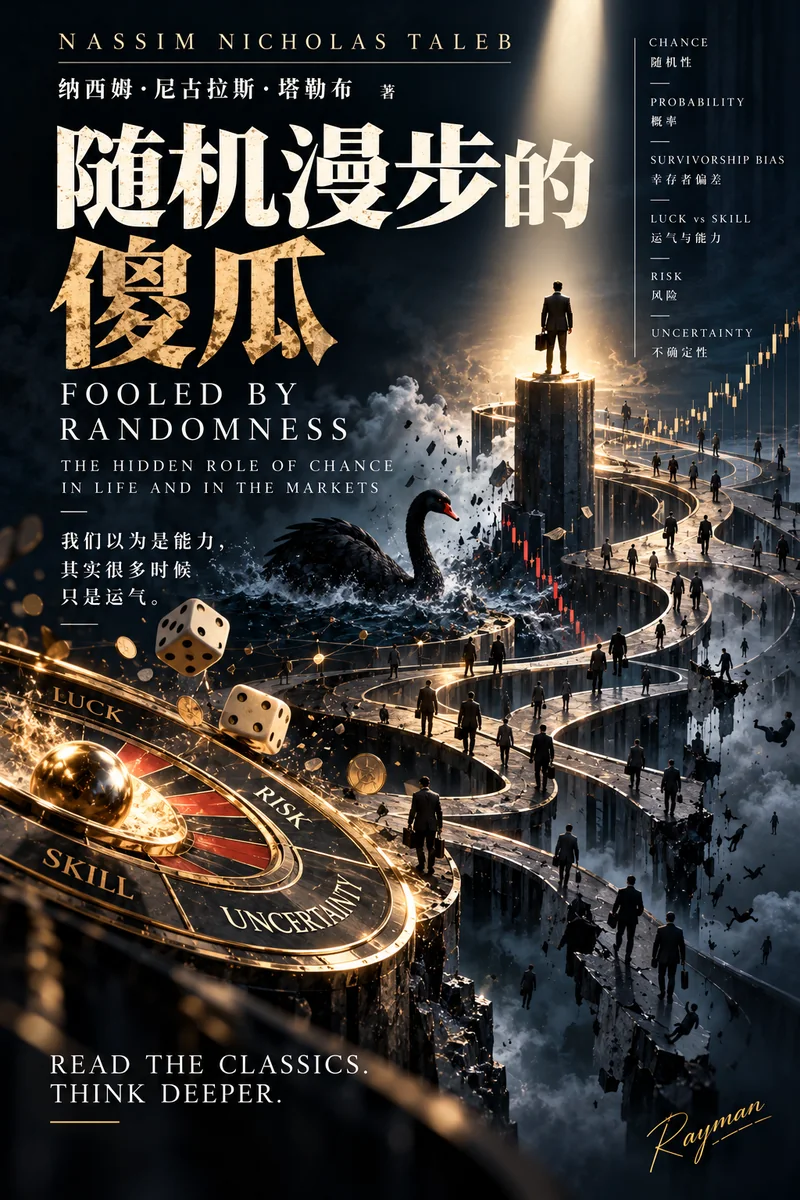
Finance 2001
Fooled by Randomness
《随机漫步的傻瓜》
The Hidden Role of Chance in Life and in the Markets
- Published
- 2001
- Category
- Finance
- Difficulty
- Intermediate
- Reading time
- ~12 hours
- Original language
- en
The Classic Index is not an objective scientific measure. It is this site's personal curation score.
What is this book about?
Taleb writes from a trader's perspective to show how we explain luck as skill and treat survivors as examples, thereby systematically overrating the reliability of our judgment. His fulcrum is the distinction between how good an outcome is and how good the decision that produced it was.
Why read it?
It takes apart the habit of judging by outcomes, which is invaluable in evaluating investments, careers, and managerial decisions. Its treatment of survivorship bias and path dependence remains one of the best entries into thinking about randomness.
Core Ideas
- We habitually infer skill from outcomes, but randomness makes that inference statistically unreliable.
- Survivorship bias shows us only the winners, leading us to overrate a strategy's general effectiveness.
- Decision quality must be assessed apart from outcomes: a good decision can produce a bad result.
- Non-linearity and path dependence mean one early accident can determine an entire long-run difference.
What questions does this book try to answer?
- How do we tell whether someone's success comes from skill or from luck?
- When randomness dominates outcomes, by what standard should decisions be judged?
Who should read it?
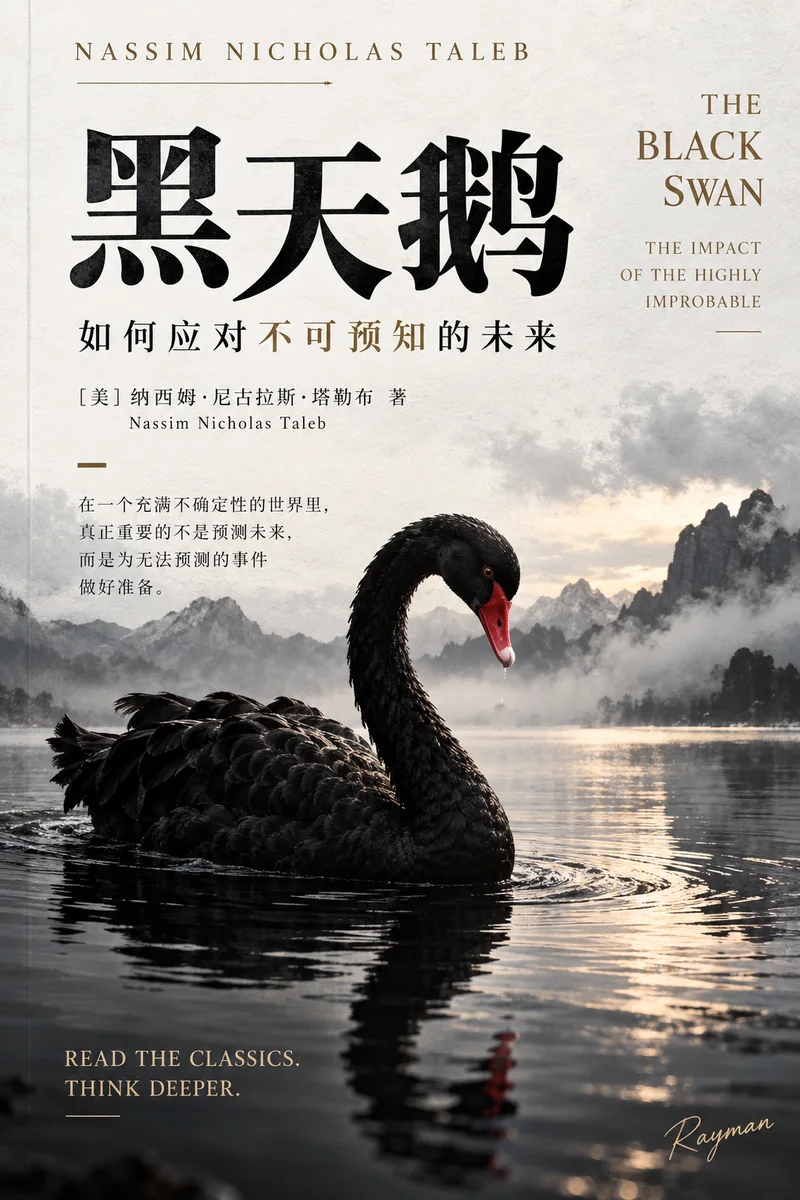
For investors, managers, and anyone who must evaluate decisions, their own or others'. It works well as a prelude to The Black Swan.
Related Books
If you like this book