World History 1997
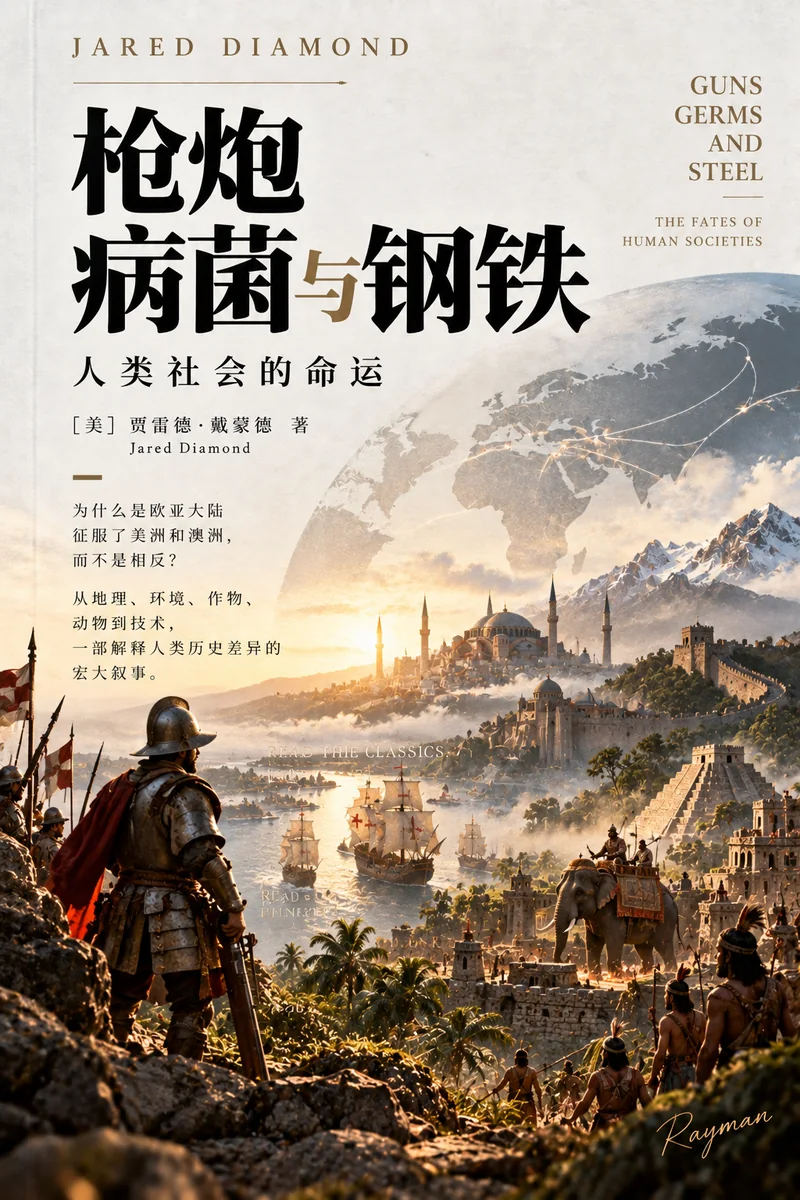
Guns, Germs, and Steel
《枪炮、病菌与钢铁》
The Fates of Human Societies
- Published
- 1997
- Category
- World History
- Difficulty
- Intermediate
- Reading time
- ~22 hours
- Original language
- en
The Classic Index is not an objective scientific measure. It is this site's personal curation score.
What is this book about?
Diamond sets out to answer a deceptively simple question: why did Eurasian societies conquer the rest of the world, and not the other way around? His answer is neither race nor culture but domesticable plants and animals, the east-west axis of the Eurasian landmass, and the geography that decided where food production appeared first — and with it dense populations, states, writing, and epidemic disease.
Why read it?
It is one of the most influential anti-racist explanations of history written in the last half-century, replacing “who was stronger” with “who accumulated a surplus first.” Just as valuable is the argument it provoked: institutionalist, contingent, and anti-determinist critiques that together make it a lesson in causal reasoning.
Core Ideas
- Where food production arose depended on the wild species available for domestication — a geographic accident, not a difference in human talent.
- Food surpluses supported denser populations, specialization, standing organizations, and writing: the proximate causes of conquest, not the ultimate ones.
- Infectious diseases evolved from livestock-borne pathogens in dense agricultural societies, and killed far more people than weapons did.
- The method is a chain of explanation: proximate causes traced back to ultimate geographic ones, rather than a single decisive factor.
What questions does this book try to answer?
- Why did history unfold so differently on different continents?
- How far do geography and environment determine the distribution of technology, institutions, and power?
Who should read it?
For readers who want to understand why history diverged. No specialist background is needed, but patience with causal argument helps, as does a willingness to read the critics of geographic determinism alongside it.
Related Books
If you like this book