Economics 2012
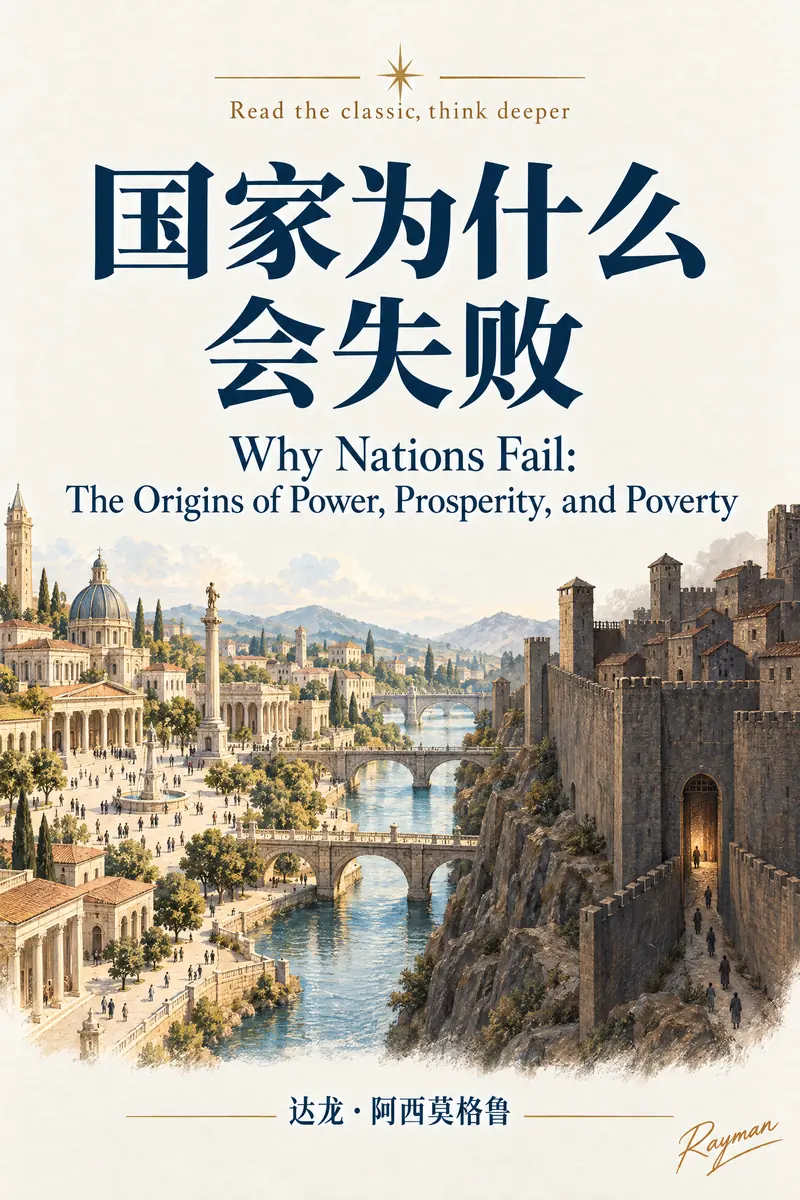
Why Nations Fail
《国家为什么会失败》
The Origins of Power, Prosperity, and Poverty
- Published
- 2012
- Category
- Economics
- Difficulty
- Intermediate
- Reading time
- ~16 hours
- Original language
- en
The Classic Index is not an objective scientific measure. It is this site's personal curation score.
What is this book about?
Acemoglu and Robinson argue that the gap between rich and poor nations lies in institutions: inclusive institutions encourage broad participation and innovation, while extractive ones serve a few and suppress growth. They use a wide range of historical and contemporary cases to reject geographic, cultural, and “ignorant policymaker” explanations.
Why read it?
It redirects the question of why some nations are rich from geography and culture to political institutions, and offers a testable mechanism. It is also among the most criticized works of institutionalism; reading it with the critiques of its causal inference clarifies the limits of that explanation.
Core Ideas
- Inclusive economic and political institutions permit broad participation, protect property rights, and encourage innovation, producing sustained growth.
- Extractive institutions let a narrow elite extract resources and typically resist technologies and competition that would erode their power.
- Critical institutional turning points often trace to contingent events and splits within elites rather than to inevitable development paths.
- The identification of causality between institutions and growth has been questioned, with critics arguing that reverse causation is equally plausible.
What questions does this book try to answer?
- Why do some nations stay rich while others stay poor?
- Between institutions and growth, which is cause and which is effect?
Who should read it?
For readers interested in development economics and political history; it is highly readable and needs no specialist background.
Reading Notes
2026-09-25
What decides long-run prosperity is not resources or culture but whether institutions spread power and reward widely enough.
The book persuades by turning "institutions" into something observable: who holds decision rights and who shares in the gains. While reading, I kept reminding myself not to treat it as a theory that explains everything — its critics have real points. Still, it gave me a useful question: when a country stagnates for a long time, ask first what its institutions are rewarding.
Related Books
If you like this book