Investment 1923
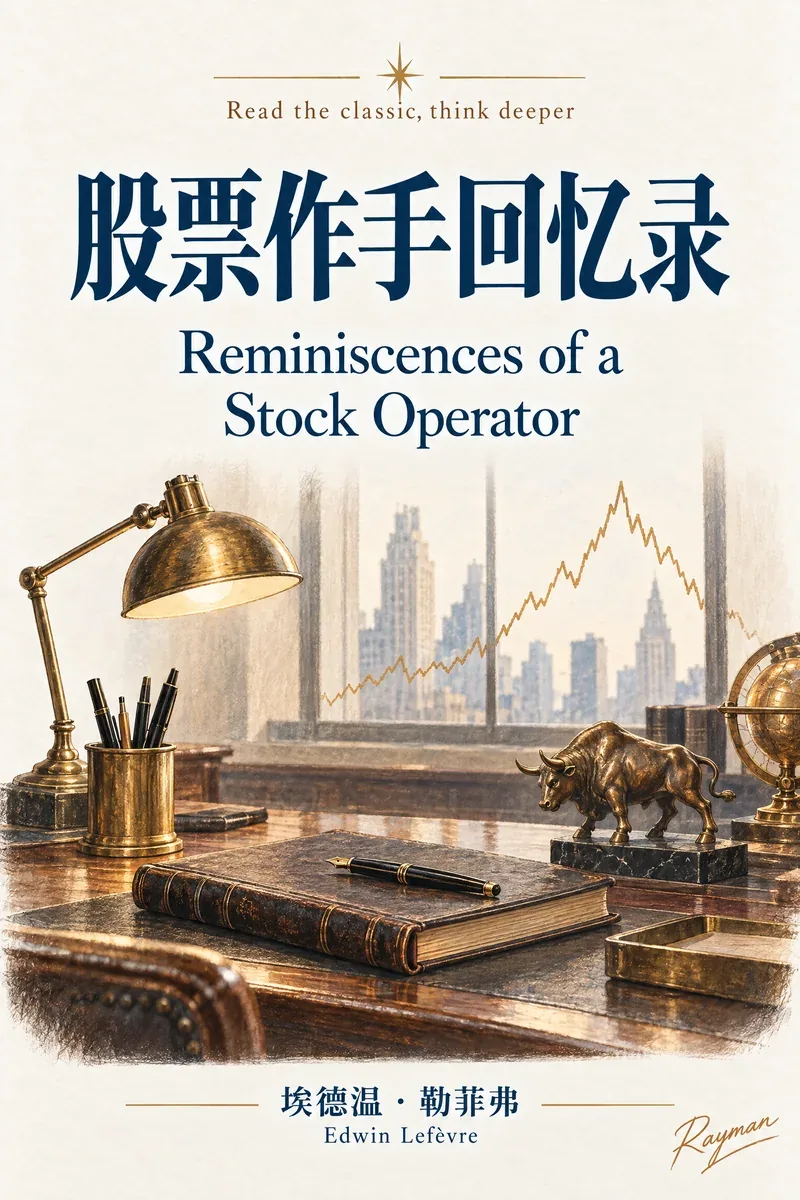
Reminiscences of a Stock Operator
《股票作手回忆录》
- Published
- 1923
- Category
- Investment
- Difficulty
- Beginner
- Reading time
- ~8 hours
- Original language
- en
The Classic Index is not an objective scientific measure. It is this site's personal curation score.
What is this book about?
A narrative based on Jesse Livermore, tracing a speculator’s rise and ruin in early twentieth-century American markets. Its subject is not technique but market psychology, timing, and self-control — and the price of breaking your own rules.
Why read it?
It shows more clearly than most textbooks that losses usually come not from bad analysis but from failures of discipline. Read it alongside the factual record of how Livermore himself ended, to see the distance between a good story and an investment lesson.
Core Ideas
- The market is never wrong; only opinions about it are, and admitting error is expensive.
- Timing and position size decide profit and loss, not merely whether the direction was right.
- The speculator’s main opponent is his own emotion, especially hope and fear.
- The narrative is a first-person memoir prone to hindsight rationalization; it is not a manual to be followed.
What questions does this book try to answer?
- Why does someone who knows the rules keep breaking them?
- Between timing and direction, which matters more under uncertainty?
Who should read it?
For readers drawn to market psychology and trading history. Treat it as a case study and a cautionary tale, not a replicable strategy.
Related Books
If you like this book