Economics 1944
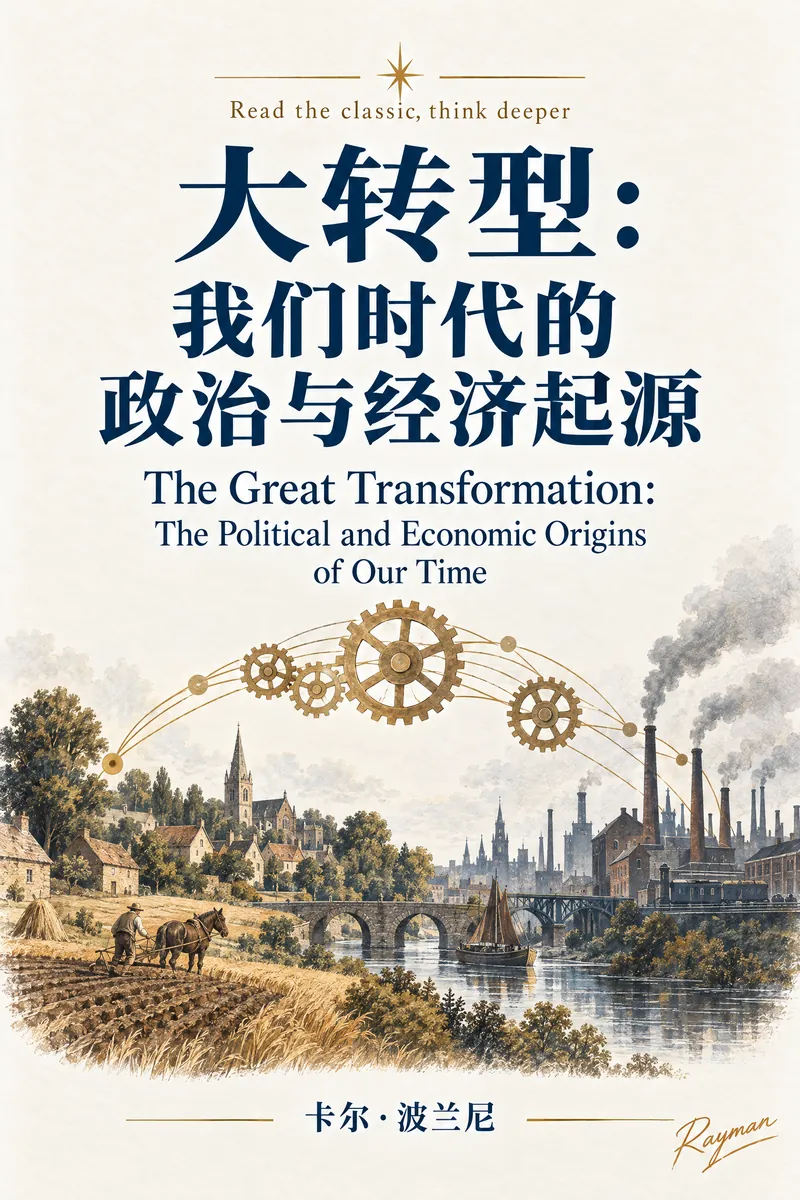
The Great Transformation
《大转型》
The Political and Economic Origins of Our Time
- Published
- 1944
- Category
- Economics
- Difficulty
- Advanced
- Reading time
- ~16 hours
- Original language
- en
The Classic Index is not an objective scientific measure. It is this site's personal curation score.
What is this book about?
Polanyi argues that the self-regulating market was not a natural evolution but a nineteenth-century political construction: land, labour, and money were treated as commodities — “fictitious commodities,” in his term — and the social self-protection this provoked forms the deep background to fascism and the world wars.
Why read it?
It offers a historical narrative entirely different from market liberalism: the market was not released but built by the state. That lens remains directly relevant to contemporary arguments about globalization, social protection, and populism.
Core Ideas
- Land, labour, and money are not produced for sale, and treating them as commodities causes social damage.
- The expansion of market society provokes a counter-movement of social protection — together they form a “double movement.”
- The gold standard and the requirements of a self-regulating international market pushed adjustment costs onto ordinary members of society.
- Economic institutions are embedded in social relations; analysing markets apart from that context leads to error.
What questions does this book try to answer?
- Was the self-regulating market a natural development or a construction?
- What social reactions does the expansion of market society provoke?
Who should read it?
For readers interested in economic history and political sociology. It is dense with historical detail and benefits from some background in nineteenth-century Europe.
Related Books
If you like this book