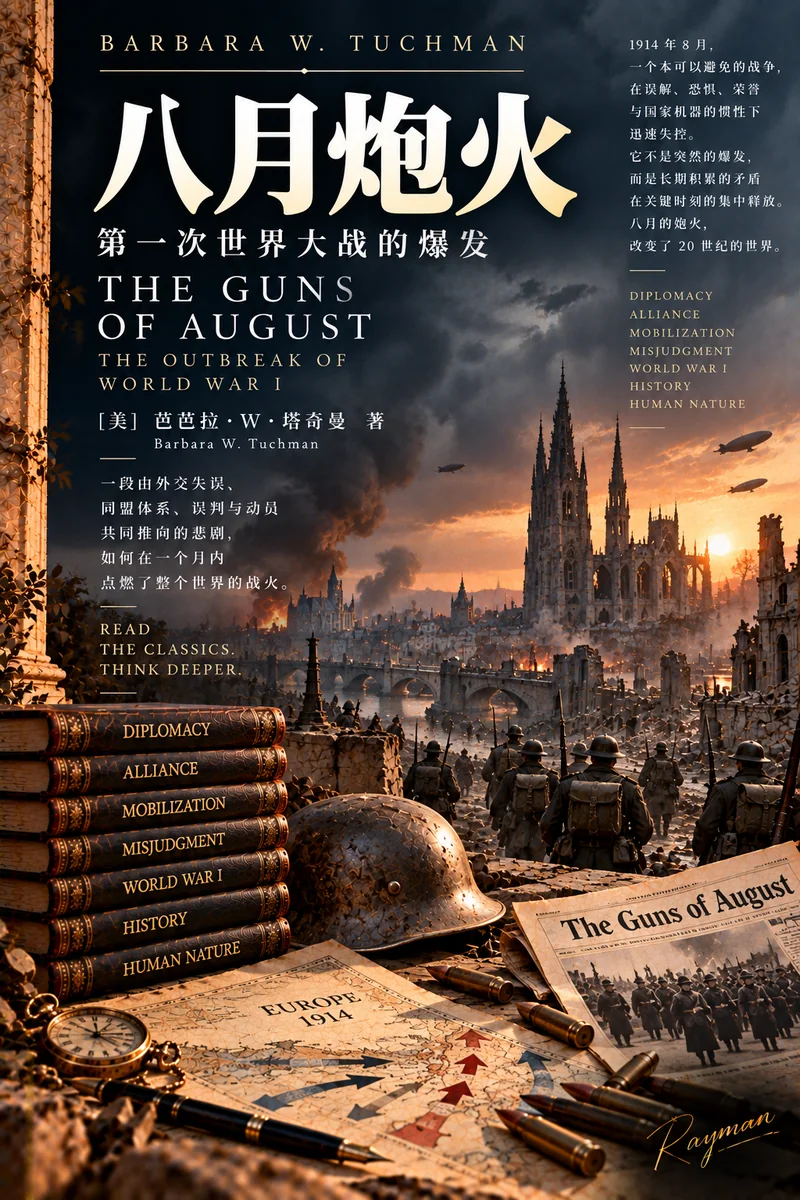
World History 1962
The Guns of August
《八月炮火》
- Published
- 1962
- Category
- World History
- Difficulty
- Beginner
- Reading time
- ~16 hours
- Original language
- en
The Classic Index is not an objective scientific measure. It is this site's personal curation score.
What is this book about?
Tuchman narrates the first month of World War I, tracing how mobilization timetables, alliance commitments, and mutual misreading of intentions turned a regional crisis into a continental war. It is also a model of narrative history that shows structure working through decisions.
Why read it?
It shows how rigid plans and bureaucratic momentum can override political judgment — still directly relevant to crisis management today. Its influence on later strategic thinking is itself part of why it is worth reading.
Core Ideas
- Mobilization timetables generated a logic of their own, narrowing the space available to diplomacy.
- Misperception of the adversary’s intentions was systematic rather than accidental.
- Political leaders surrendered control of events to military schedules.
- Chance and personality mattered as much as structural pressure.
What questions does this book try to answer?
- How does a regional crisis escalate into a world war?
- Under time pressure, how much real choice do decision-makers retain?
Who should read it?
For readers new to history and strategy. No military background is needed; the narrative carries itself.
Reading Notes
2026-09-24
Great wars are often not decided by a single person but carried to completion by mechanisms that were already in motion.
This book made me reconsider what "out of control" actually means. Mobilization timetables, alliance obligations, and communication delays — neutral-looking arrangements — together form a system that is hard to stop once started. The habit I took from it: when a conflict escalates, do not rush to assign blame. Look first for mechanisms that are already locked in. Blame is satisfying; mechanism analysis is what shows you what comes next.
Related Books
If you like this book