World History 2005
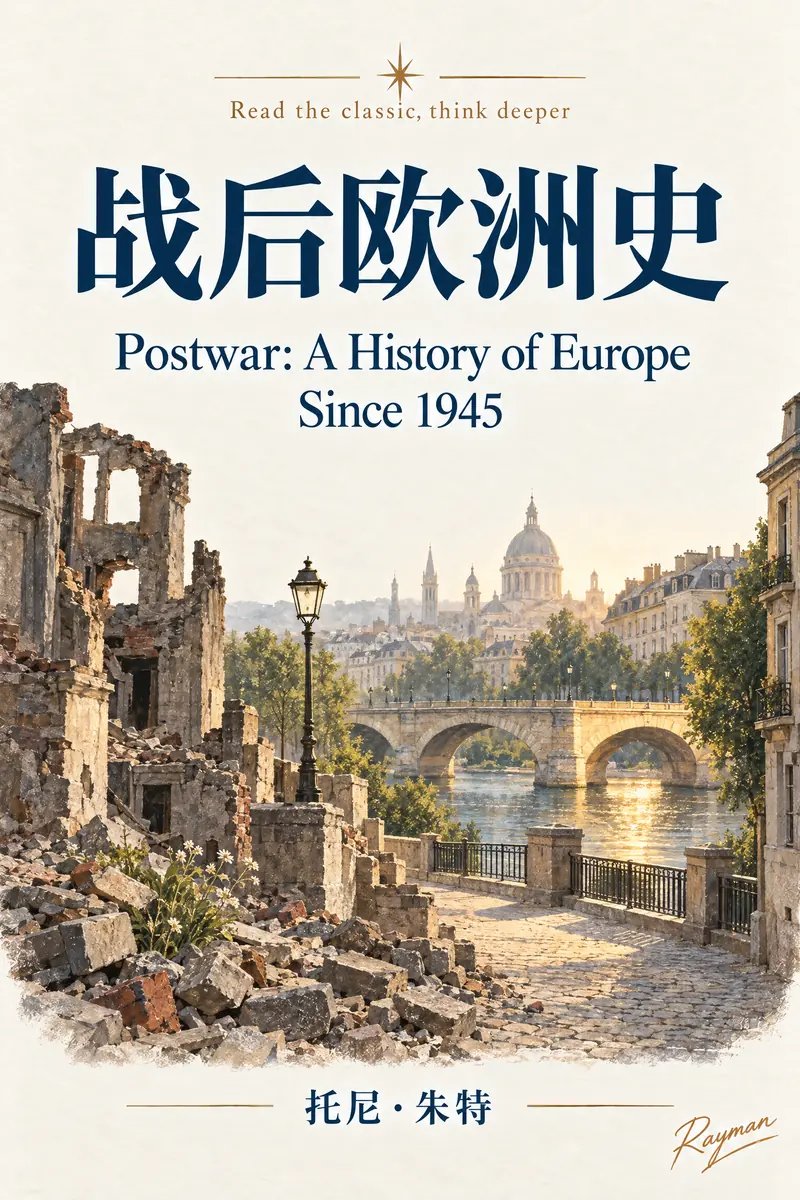
Postwar
《战后欧洲史》
A History of Europe Since 1945
- Published
- 2005
- Category
- World History
- Difficulty
- Intermediate
- Reading time
- ~28 hours
- Original language
- en
The Classic Index is not an objective scientific measure. It is this site's personal curation score.
What is this book about?
Judt synthesizes European history from 1945 to the early 2000s: reconstruction, Cold War division, welfare states, decolonization, the memory of war, and European integration. Its distinguishing feature is that it treats memory and historiography as part of the history itself.
Why read it?
It explains how the Europe we recognize today — integrated, social-democratic, obsessed with memory — was constructed out of catastrophe. Judt does not hide his judgments, which makes his arguments easy to engage with and easy to contest.
Core Ideas
- Postwar stability rested on both the welfare state and the frozen borders of the Cold War.
- European integration was as much a response to the memory of war as an economic project.
- The continent’s memory boom about the war came late, largely after 1968 and 1989.
- Judt argues the postwar settlement eroded after 1989, and the book ends skeptical about the 2000s.
What questions does this book try to answer?
- What was postwar Europe’s stability built on?
- How does a society live with its own violent past?
Who should read it?
For readers of modern European history. A basic framework of twentieth-century world history helps, or the names and parties will feel dense.
Related Books
If you like this book