Technology & Science 2014
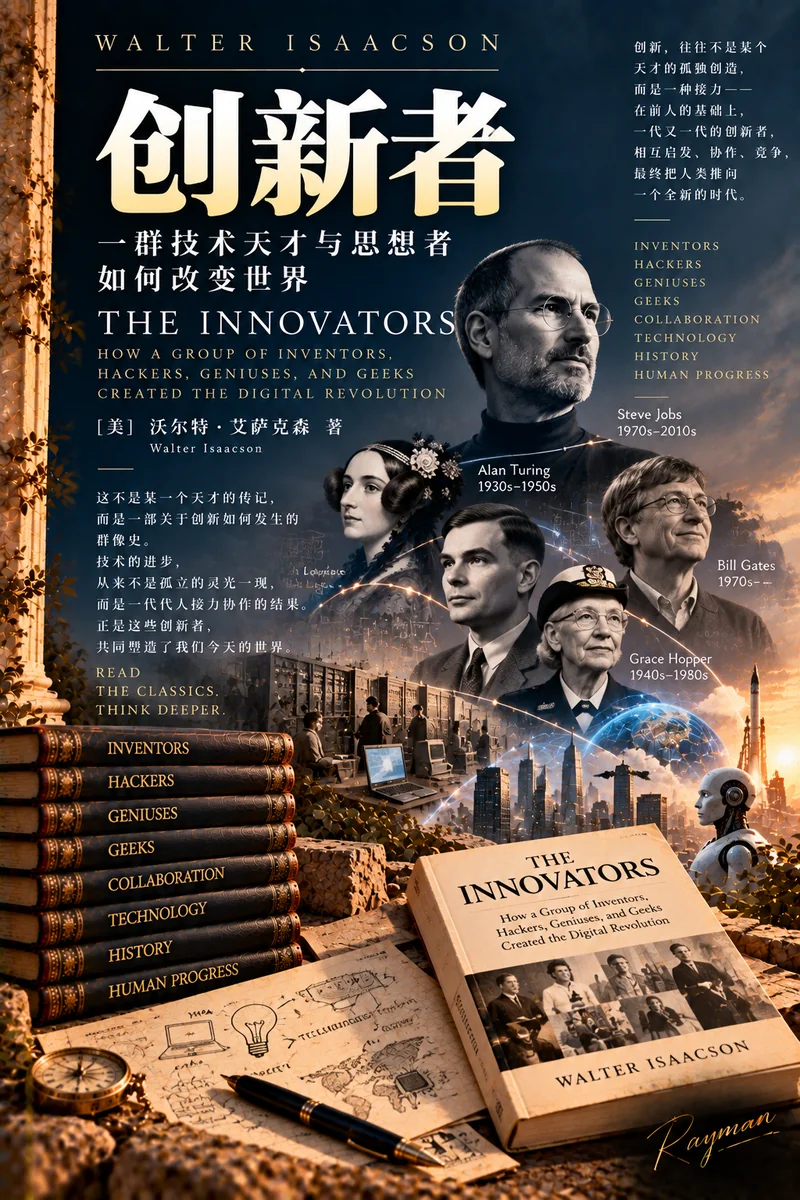
The Innovators
《创新者》
How a Group of Hackers, Geniuses, and Geeks Created the Digital Revolution
- Published
- 2014
- Category
- Technology & Science
- Difficulty
- Intermediate
- Reading time
- ~20 hours
- Original language
- en
The Classic Index is not an objective scientific measure. It is this site's personal curation score.
What is this book about?
Isaacson rejects the lone-genius narrative and argues that the digital revolution was above all collaborative: a relay among mathematicians and engineers, individuals and teams, government and business. From Babbage to the internet and open source, he reduces innovation to a social process.
Why read it?
In an industry fond of hero stories, this book is a necessary correction: nearly every invention credited to one person stands on a chain of collaborators and failures. It applies just as well to how technical work is organized today.
Core Ideas
- The digital revolution was a long relay, not a series of isolated flashes of genius.
- Human-machine collaboration, not replacement, has historically been the most productive mode of work.
- Only the combination of government funding, corporate R&D, and academic freedom produced the infrastructure of modern computing.
- Open standards and communities tend to outlast closed proprietary systems.
What questions does this book try to answer?
- Does innovation come from individual genius or from collaborative networks?
- What kind of organization best sustains long-term technical breakthroughs?
Who should read it?
For readers interested in the history of technology and the mechanics of innovation. It is long, but individual figures and themes can be read separately.
Related Books
If you like this book