Technology & Science 2022
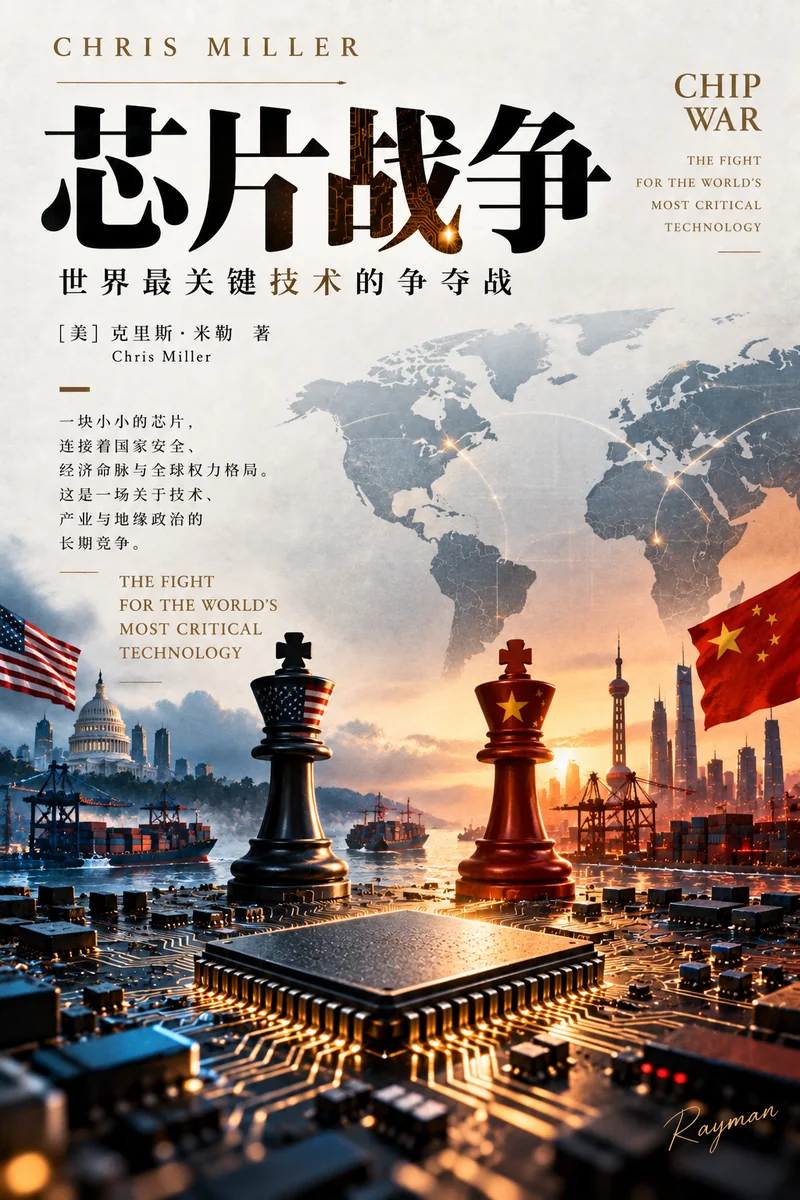
Chip War
《芯片战争》
The Fight for the World's Most Critical Technology
- Published
- 2022
- Category
- Technology & Science
- Difficulty
- Intermediate
- Reading time
- ~16 hours
- Original language
- en
The Classic Index is not an objective scientific measure. It is this site's personal curation score.
What is this book about?
Miller braids the history of the semiconductor industry with geopolitics: from the invention of the transistor, through Japan's rise and Taiwan's foundry model, to the US-China confrontation over lithography and process nodes. His central claim is that the extreme concentration of the chip supply chain is both a miracle of efficiency and the world's most fragile link.
Why read it?
It makes “how technology determines power” concrete: not abstract national strength but a particular machine, a particular fab, a particular strait. That specificity explains more than any macro judgment.
Core Ideas
- Every link of the modern economy depends on chips, and chip production is concentrated in a very few fabs: a systemic vulnerability.
- Semiconductor specialization is globalization taken to its extreme, which is why it became geopolitics' first battlefield.
- Shifts in technological advantage are often driven by business models — the foundry, for instance — rather than by invention alone.
- Leading at a process node is not merely commercial; it converts directly into military and intelligence capability.
What questions does this book try to answer?
- Why can a chip the size of a fingernail tip the balance of power between nations?
- How did globalization at its most specialized produce both efficiency and fragility?
Who should read it?
For readers following technology, industry, and geopolitics. No engineering background is required, but patience with supply-chain detail is.
Related Books
If you like this book