Philosophy c. 340 BC
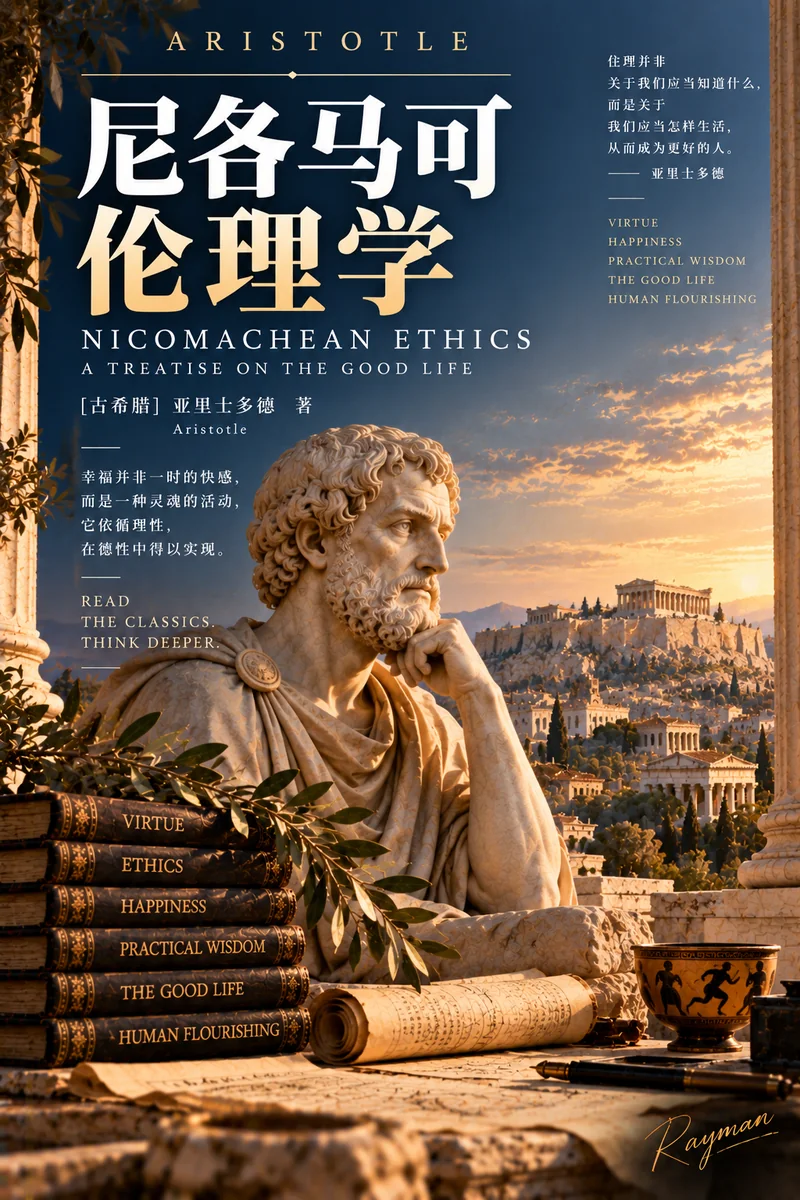
Nicomachean Ethics
《尼各马可伦理学》
- Published
- c. 340 BC
- Category
- Philosophy
- Difficulty
- Advanced
- Reading time
- ~14 hours
- Original language
- grc
The Classic Index is not an objective scientific measure. It is this site's personal curation score.
What is this book about?
Aristotle inquires into what makes a human life go well, developing the idea of happiness as activity in accordance with virtue, the doctrine of the mean, and the roles of habit, friendship, and practical wisdom.
Why read it?
It treats ethics as a practical science about how to live, not merely a science of rules, and its concepts — virtue as habit, the mean, practical wisdom — remain active in contemporary ethics. It is also the origin of much later thought about character and flourishing.
Core Ideas
- Happiness is not a feeling but an activity of the soul in accordance with virtue.
- Virtues are habits developed by practice, not knowledge acquired by instruction.
- Virtue lies in a mean relative to the person and the situation, not a fixed midpoint.
- Applying general principles to particular cases requires practical wisdom.
What questions does this book try to answer?
- What is human happiness, and how is it attained?
- Is virtue a kind of knowledge or a kind of habit?
Who should read it?
For readers interested in ethics and the question of a good life. Use an annotated translation; the terminology diverges sharply from everyday speech.
Related Books
If you like this book